

The Farm Today
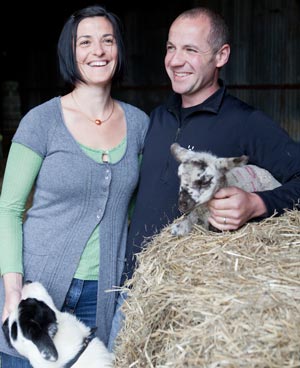
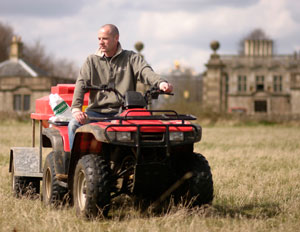
Mel and Jonty
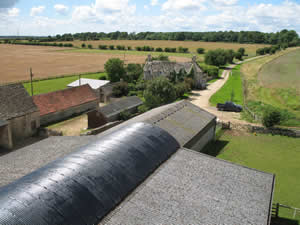
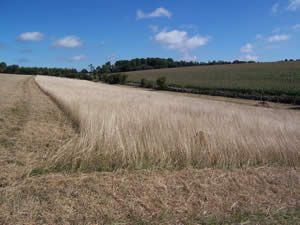
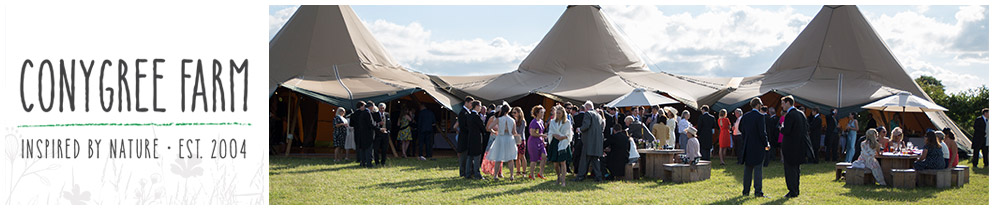
A view of Conygree Farm
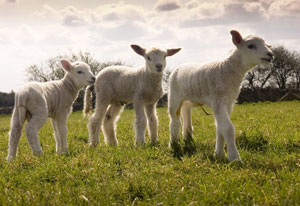
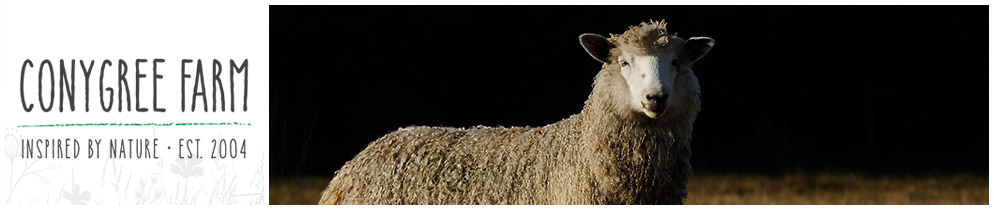
Lambs
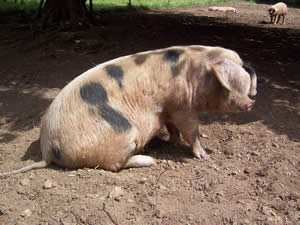
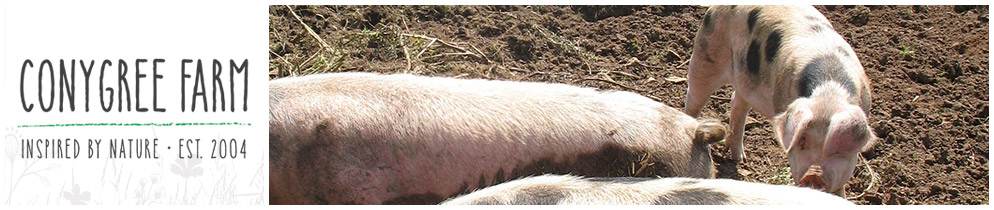
A free range Gloucester Old Spot pig
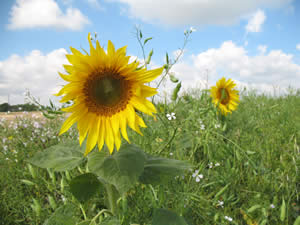
Wild bird food
About Us
Jonathan comes from a farming family in Nottinghamshire and worked as a Farm Environment Advisor for 10 years before deciding to practice what he preaches on his own farm. He also works at the Royal Agricultural University in nearby Cirencester.
Prior to marrying Jonathan and moving to Conygree Farm, Mel managed Norfolk Wildlife Trust’s conservation grazing operation (sheep, cattle and ponies) for 12 years, kept her own sheep and trained her border collies. She is now enjoying managing the conservation grazing on the farm and running the farm business.
Our First Steps
Most farms in the area are now large intensive arable units or desirable residences and hobby farms. Thankfully the National Trust was keen to see the farm remain and develop as a traditional working farm, providing a range of environmental, social and economic outputs. The Trust is also committed to helping young farmers, "new entrants" and new types of farm tenant in today’s changing and exciting agricultural climate.
As such, the farm tenancy was advertised and let in 2004 and we, with some trepidation took over that winter. Our aim was to develop Conygree as a working mixed farm that respected and enhanced the local landscape and wildlife habitat.
As the farm has not been grazed by livestock for many years our first job, with the help of the Environmental Stewardship Scheme, was to tackle acres of thistle, reseed the majority of the arable areas back to wild flower meadows and pasture, and to erect 6.5 miles of new fencing. Eventually, these areas will support up to 150 traditional breed sheep, 12 native suckler cows with their calves, and a few free range pigs. We reared our first Cotswold sheep and Gloucester Old Spot pigs in 2006 and our first Hereford cows arrived in 2012. We converted to full organic status in December 2011.
Arable areas play an important part of the farming system. We leave an area fallow and sow wild bird cover and nectar mix in rotation to provide nesting and feeding areas for a variety of birds and insects.
Our Challenge
The farming industry faces many challenges. There is a need to produce more food with fewer resources (fuel, fertiliser and water) whilst at the same time do more for biodiversity, landscape and heritage. Farmers are also tasked with reducing their carbon footprint, providing access and educational opportunities, and producing renewable energy.
Amid these challenges we see opportunities, due to increased public appreciation of local food, traditional breeds and high animal welfare, and more support for environmental management. We believe it is a good time to be involved in farming.